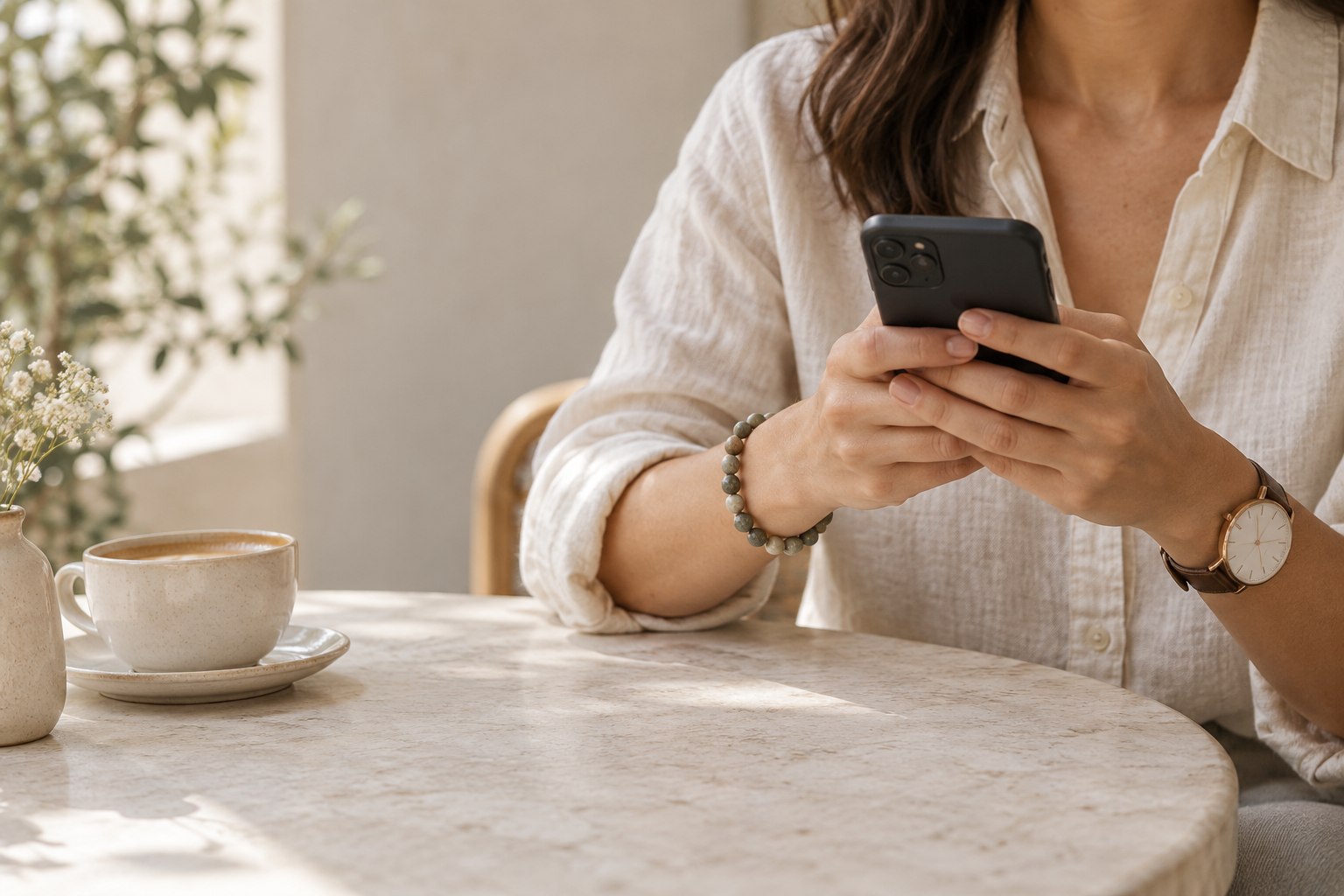
Can a crystal bracelet scratch your watch or phone? It depends on the materials and surfaces that meet, how often they rub or strike, and whether grit or coatings are involved. Contact alone does not prove damage.
It also helps to separate the parts you are concerned about. A watch face, case, and band are different surfaces; so are a phone screen, back, and protective case. There is no reliable one-word answer for every bracelet and every device. If you want to be cautious, avoid repeated contact and follow the care instructions for your particular device.
What does “crystal bracelet” mean?
“Crystal bracelet” is a broad product description, not the name of one specific material. Beads can be made from different minerals, glass, or other materials, and a bracelet may also include metal details or a charm. Color and appearance alone do not establish the material.
A bead, fitting, or charm may meet a device in a different way as you move. Without verified information about both pieces, it is not possible to promise that a pairing is scratch-proof or that damage is certain.
Watch face and watch case are different
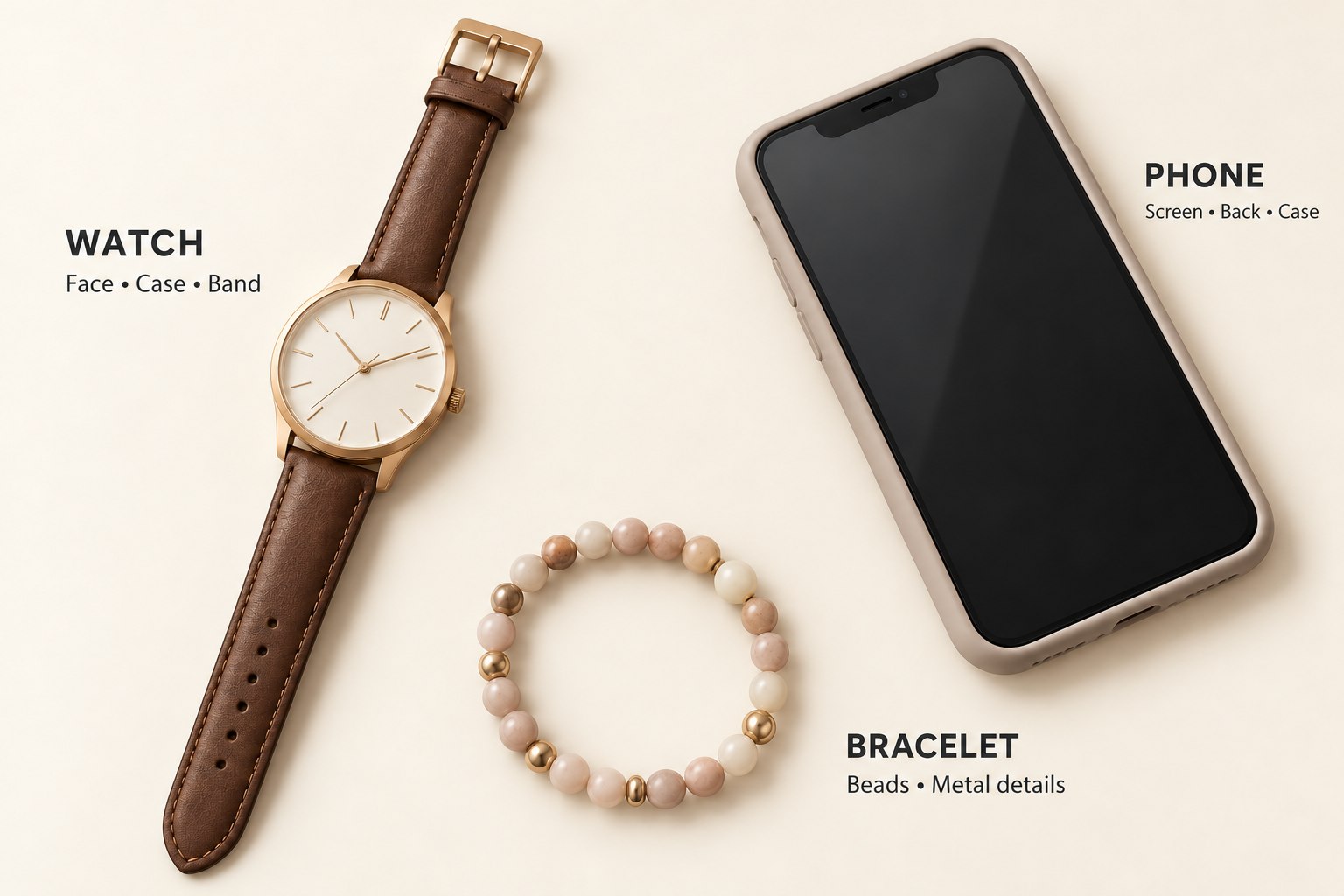
When a bracelet sits next to a watch, it may touch the face, case, crown, clasp, or band. Those parts can have different materials and finishes. Check the watch maker’s product information and care guidance for the surfaces of your specific model.
Even if the bracelet never touches the watch face, it may repeatedly brush against the side or clasp. If the watch is valuable, vintage, plated, or especially important to keep in its present condition, wearing the bracelet on the other wrist is a simple way to avoid contact between them.
A phone screen is not the only surface to consider
A phone may have glass on the front or back, a coating on some surfaces, and a separate protective case. The case itself may also show wear. If your bracelet moves across the phone while you hold it, pay attention to repeated rubbing rather than judging the screen alone.
Apple advises that abrasive materials can diminish the iPhone’s fingerprint-resistant coating and may scratch the device. It also recommends removing dirt or sand and cleaning with a soft, lint-free cloth. That guidance supports keeping surfaces clean and following the instructions for your own model; it does not establish what any particular bracelet will do. Read Apple’s iPhone cleaning guidance.
A protective case can reduce direct contact with the phone, but the case may still acquire marks. Its material and condition matter too.
What Mohs hardness can—and cannot—tell you
Online advice sometimes compares a gemstone’s Mohs hardness with a watch crystal or phone screen and then declares the result certain. The Mohs scale is a relative scratch-hardness scale. It does not tell you how quickly everyday contact will cause wear or whether a coating will be affected.
The Gemological Institute of America explains that the scale ranks relative scratch hardness and that hardness is only one part of gemstone durability. A hardness number alone cannot predict the outcome for a particular bracelet and device. Read GIA’s explanation of gemstone durability.
How to reduce repeated contact
- Wear the bracelet on the opposite wrist if you want to keep it away from a watch.
- Lower and turn your wrist as you normally would. Notice whether beads or fittings keep striking or rubbing the watch.
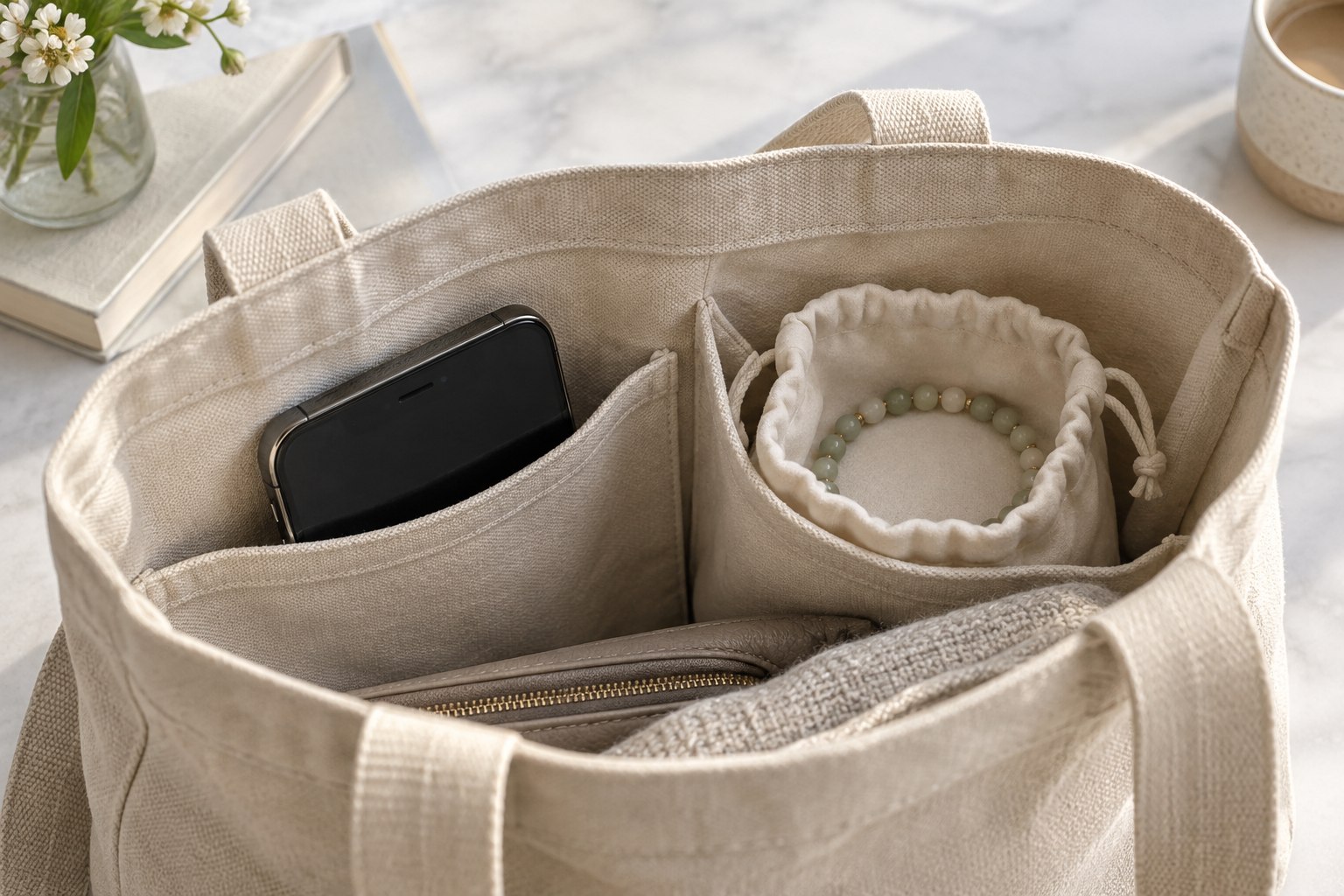
- Keep a loose bracelet separate from your phone when you put them in a bag or pocket.
- Remove visible grit and clean your device according to its maker’s instructions.
- Take the bracelet off, or change wrists, if it repeatedly knocks against a desk or another hard surface.
Avoid scratch-testing a finished bracelet or device. The test itself can cause damage, and its result may not reflect ordinary wear.
Can you still wear a bracelet with a watch?
Yes, if the combination is comfortable and the pieces are not repeatedly rubbing or striking each other. Start with one bracelet and see where it naturally sits as you move. If it crowds the watch or the contact concerns you, move it to the other wrist.
For proportions and styling ideas, read our guide to stacking beaded bracelets.
Frequently asked questions
Can a crystal bracelet scratch a watch?
It depends on the bracelet materials, the watch’s surfaces, and how the pieces contact each other. Check the watch maker’s materials and care instructions, and avoid repeated rubbing if you want to be cautious.
Can a crystal bracelet scratch a phone screen?
There is no reliable answer for every bracelet and phone. Keep surfaces clean, avoid repeated contact, and follow your phone maker’s care guidance.
Will a phone case prevent scratches?
A case can keep a bracelet from touching the phone itself, but the case may still show wear or marks. Protection depends on its design and material.
Does Mohs hardness prove that a bracelet will scratch a device?
No. Mohs hardness is a relative, qualitative scale. It does not, by itself, predict what repeated everyday contact will do to a particular device.
Explore bracelet designs
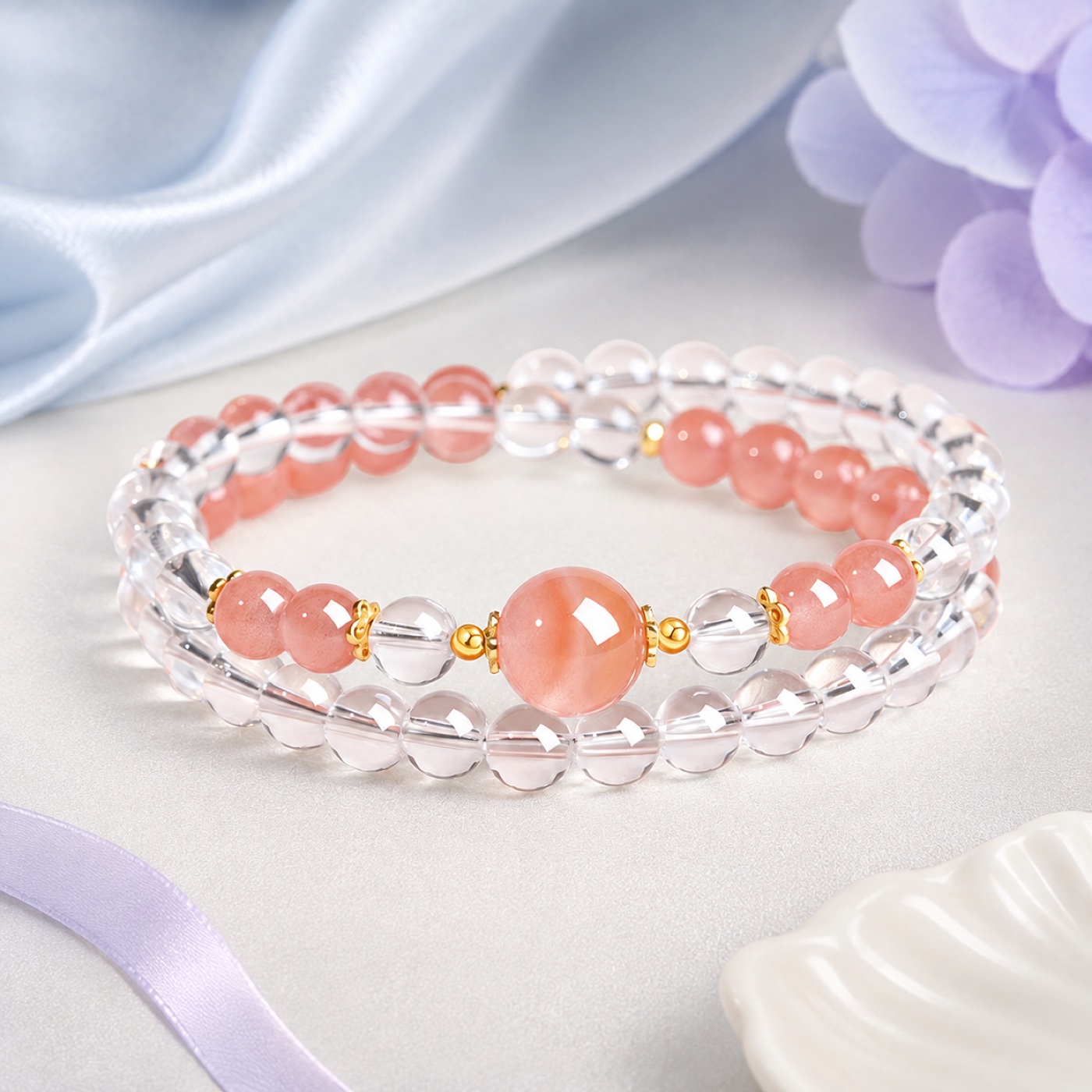
If you are browsing bracelets for everyday styling, view the Clarity Arc Coral Focal Double-Wrap Bead Bracelet or explore the full Crystal Bracelets collection. Review each product’s details and choose a style that suits how you plan to wear it.