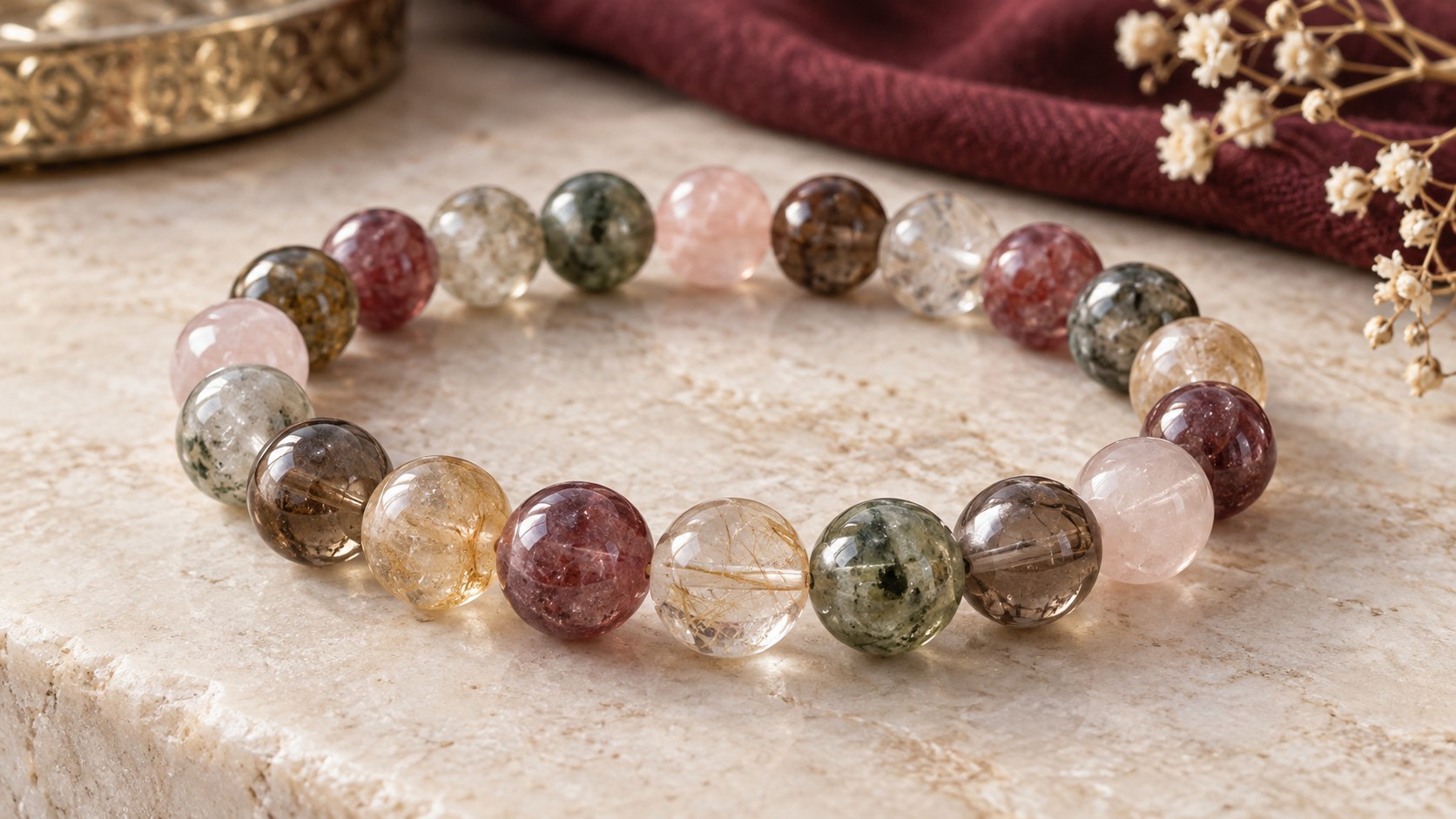
Two beads in the same crystal bracelet can look surprisingly different. One may be clearer, darker, cloudier, or more strongly patterned than the bead beside it. That difference is not automatically a flaw—and it is not automatic proof that the material is natural, either.
The useful question is more specific: are you seeing normal variation inside the material, a change caused by lighting and photography, or physical damage that could affect wear? This guide gives you a practical way to inspect a bracelet without making claims that photos and home checks cannot support.
Start with a three-part check
- Change the light. Look at the bracelet in indirect daylight, warm indoor light, and cool indoor light.
- Rotate each bead. An internal feature often changes position or visibility as the bead turns; surface damage stays tied to one spot on the exterior.
- Inspect the surface and drill holes. Chips, rough edges, and fractures that reach the surface deserve more attention than a cloud or line enclosed inside a polished bead.
Use a clean cloth first so fingerprints, lotion, and dust do not become part of the diagnosis. A phone flashlight can help, but avoid judging color from a single bright beam.
Why beads from one bracelet can vary
Materials used for beads do not all have a uniform appearance. Color and clarity can vary within one source material and between different pieces. When beads are cut and polished, those differences may appear side by side in a finished strand.
Color zoning and uneven saturation
A bead may be pale on one side and more saturated on the other. Another may show a band, patch, or gradual transition. Cutting orientation matters too: similar material can face the light differently after shaping.
Clouds, needles, crystals, and veils
Gemologists use the broad term inclusion for material or features enclosed within a gemstone. Depending on the material, inclusions may look like tiny crystals, fine needles, soft clouds, wispy veils, or internal fingerprints. The Gemological Institute of America explains that inclusions can provide useful identification clues, but interpreting them correctly requires training and magnification.
An inclusion can be stable and visually interesting, but its presence alone does not prove that a bead is natural, untreated, or correctly labeled. Synthetic and treated materials can also show internal features.
Transparency differences
One bead may transmit light easily while the next appears milky or opaque. That can come from a different concentration of inclusions, a darker color zone, or the way the bead was cut. On a multicolor design such as the Chromara Multicolor Double-Strand Bracelet, deliberate changes in color and scale are part of the composition rather than evidence of a mismatched strand.
Natural-looking feature or damage?
| What you see | Internal feature | Possible damage |
|---|---|---|
| Fine line | Appears enclosed and changes as you rotate the bead | Reaches the surface, catches a fingernail, or has a sharp edge |
| Cloudy area | Soft-edged patch within the material | Dull, abraded patch on the outside |
| Mark near a hole | Smooth opening with an internal line behind it | Fresh chip, radiating fracture, or rough material missing from the rim |
| Different color | Gradual zoning or stable difference under several lights | Surface color appears scratched, concentrated around holes, or transfers to cloth |
This comparison is a screening tool, not a gem identification test. If the bracelet is valuable, the material is disputed, or the feature is difficult to interpret, a qualified gemologist can examine it with appropriate instruments.
Pay special attention to drill holes
Drilling concentrates stress in a small area. A tiny irregularity at a bead opening can be harmless, especially when the edge is polished smooth. A widening fracture, missing chip, or sharp rim is different because it may rub against the cord and weaken the bracelet over time.
Gently separate neighboring beads and inspect each opening. Do not pull the elastic hard to create space. If a rough hole is cutting into the cord, stop wearing the bracelet until the bead or stringing material can be checked.
Why it may look different from the product photo
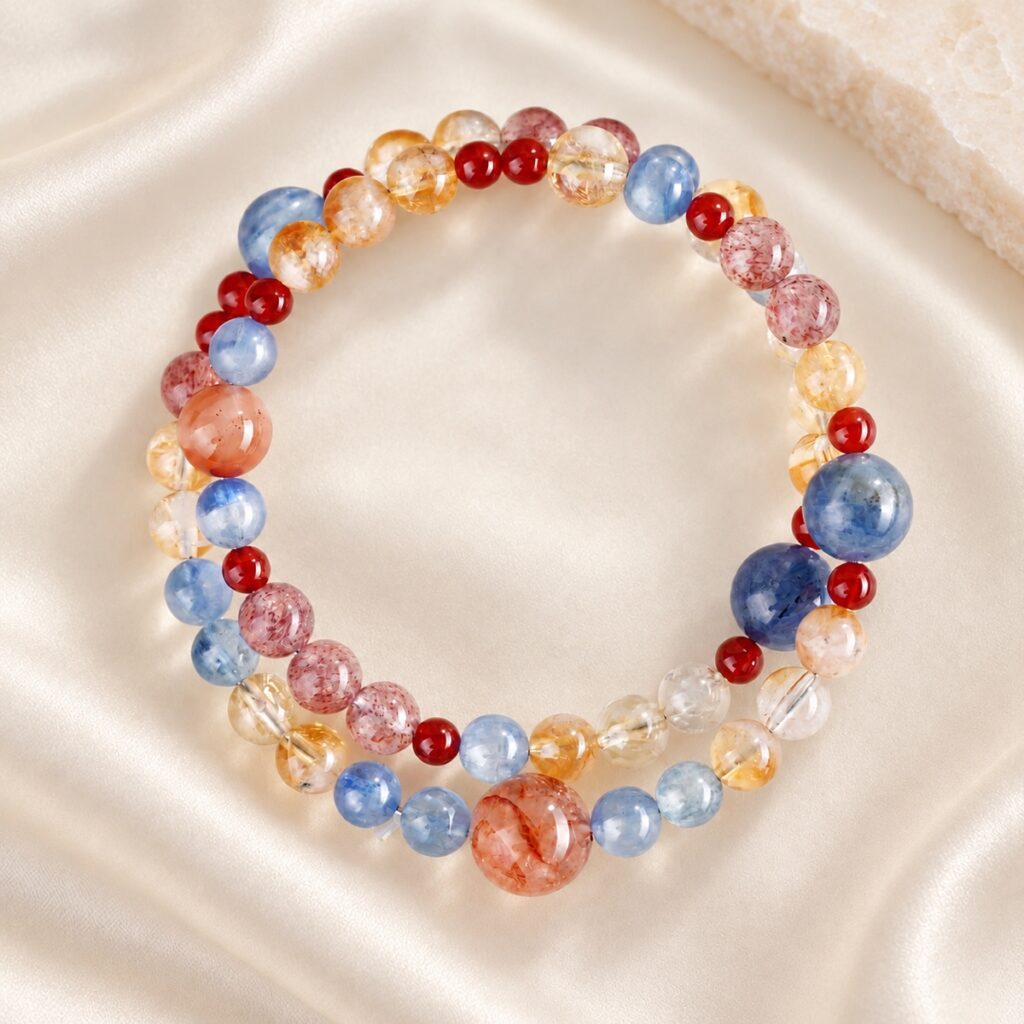
Product photography controls light, background, camera exposure, and color balance. Your screen adds another layer of interpretation. A pale blue bead may look cooler against white, warmer beside skin, and darker in a room with yellow lighting.
Close-up images can exaggerate contrast and make small internal features appear prominent. Before deciding that a bracelet is materially different from the listing, compare it in indirect daylight and review every available product image—not only the most dramatic close-up.
Variation should still fall within what the listing reasonably presents. If the overall palette, bead shape, focal arrangement, or construction is substantially different, ask the seller for clarification while the return window is open.
When to keep wearing it—and when to pause
- Usually reasonable to monitor: enclosed clouds, stable color zoning, smooth internal lines, and small differences in clarity.
- Ask the seller: an unexpected bead type, unexplained coating, major strand mismatch, or a feature the listing does not help you interpret.
- Pause wear: a sharp chip, a crack that reaches the surface, a damaged drill hole, a loose focal element, or cord that is visibly fraying.
If you continue wearing the bracelet, follow the care instructions for its specific materials and construction. When those details are not available, avoid impacts and remove it before activities that could expose the beads, cord, metal, coating, or other components to moisture or chemicals. For a broader routine, see our guide to wearing a crystal bracelet every day.
How variation affects choosing and styling
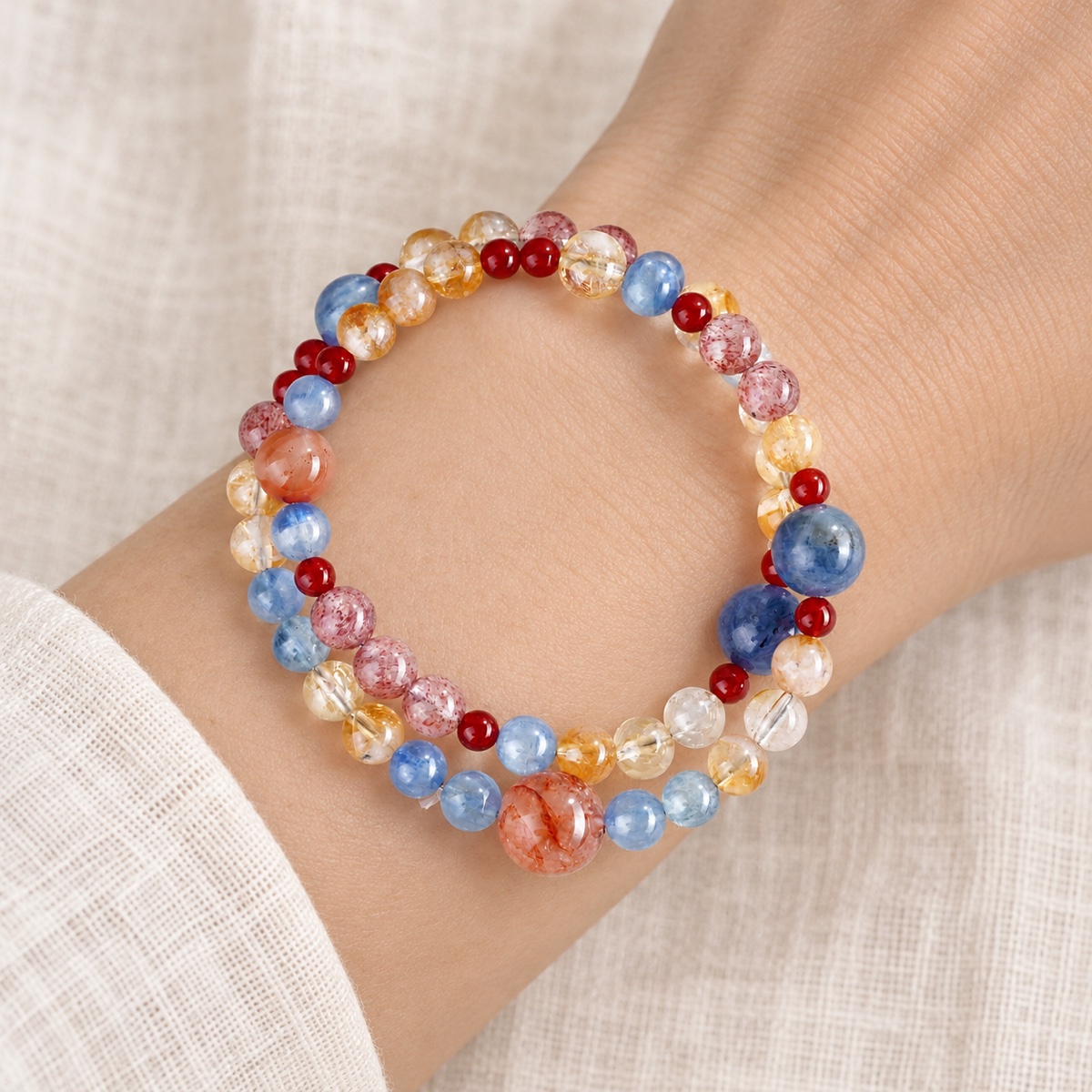
Variation is also a design decision. A tightly matched strand feels calm and minimal. A bracelet with visible shifts in tone or clarity feels more organic and can become the focal point of a stack. Neither look is automatically higher quality; the right choice depends on what the seller disclosed and what you want to wear.
Bead scale changes how easily you notice those details. Larger beads reveal more surface and internal pattern, while smaller beads often read first as an overall color rhythm. Our beaded bracelet size guide explains how bead diameter changes visual presence and fit.
If the bracelet contains several colors or strong internal patterns, pair it with one quieter piece rather than adding competing focal points. See how to stack beaded bracelets for a practical color and proportion framework.
A better question than “Is every bead identical?”
Perfect matching is not the only sign of good workmanship, and visible variation is not a universal certificate of authenticity. A more useful standard is whether the bracelet matches its description, the variation feels intentional or reasonably disclosed, the surfaces are well finished, and the construction is sound.
Some differences are part of the material’s appearance, some come from light and photography, and a smaller group signal damage that deserves action. Knowing the difference helps you choose—and wear—your bracelet with more confidence.
Quick questions
Do inclusions mean a crystal bracelet is real?
No single visible inclusion proves identity or natural origin. Internal features can offer clues, but reliable identification may require professional testing.
Is a line inside a bead always a crack?
No. It may be an enclosed inclusion, growth feature, or healed internal fracture. A line that visibly reaches the surface, has a sharp or rough edge, or appears to be spreading from a chip is more concerning, but these observations cannot confirm a crack. When in doubt, pause wear and ask a qualified jeweler or gemologist to examine it.
Should all beads match the product photo exactly?
Not necessarily. Lighting, screens, and material variation can change appearance. The bracelet should still match the listing’s overall palette, construction, and disclosed characteristics.
Ready to compare finished designs? Browse Evara Vale crystal bracelets and review the exact product photos and published details for each piece.