
Online product images can help you compare visible design features such as color, bead arrangement, and apparent surface finish. Unless a seller confirms that an image is an unaltered photograph of the specific item, it cannot establish the material, natural or laboratory origin, treatment, or current condition. If those details matter, review written disclosure and ask for current, unaltered close-up photos; for higher-value purchases, consider independent gemological testing.
This guide explains how to tell if a crystal bracelet is real without relying on viral “one-test” claims. It also shows how to judge workmanship and overall quality before you buy.
First, what does “real crystal” mean?
Before judging a bracelet, separate four different questions:
- Natural: the material formed in nature.
- Lab-grown or synthetic: material made in a laboratory with essentially the same chemical and physical properties as its natural counterpart.
- Imitation or simulant: a different material chosen to resemble another gem.
- Treated: natural or laboratory-grown material whose color or appearance has been altered or improved.
These categories are not interchangeable. A synthetic gem is not the same thing as a glass imitation, while a natural stone may still have been dyed, heated, filled, coated, or otherwise treated. The most useful question is therefore not simply “Is it real?” but “What exactly is the material, and has it been treated?”
What product images can and cannot show
1. Whether variation looks natural and coherent
Materials can vary in tone, translucency, inclusions, banding, or cloudiness. A bracelet does not need every bead to look identical to be well made. Thoughtful matching can make beads feel visually cohesive while retaining individual differences, but an image alone cannot establish the material or origin.
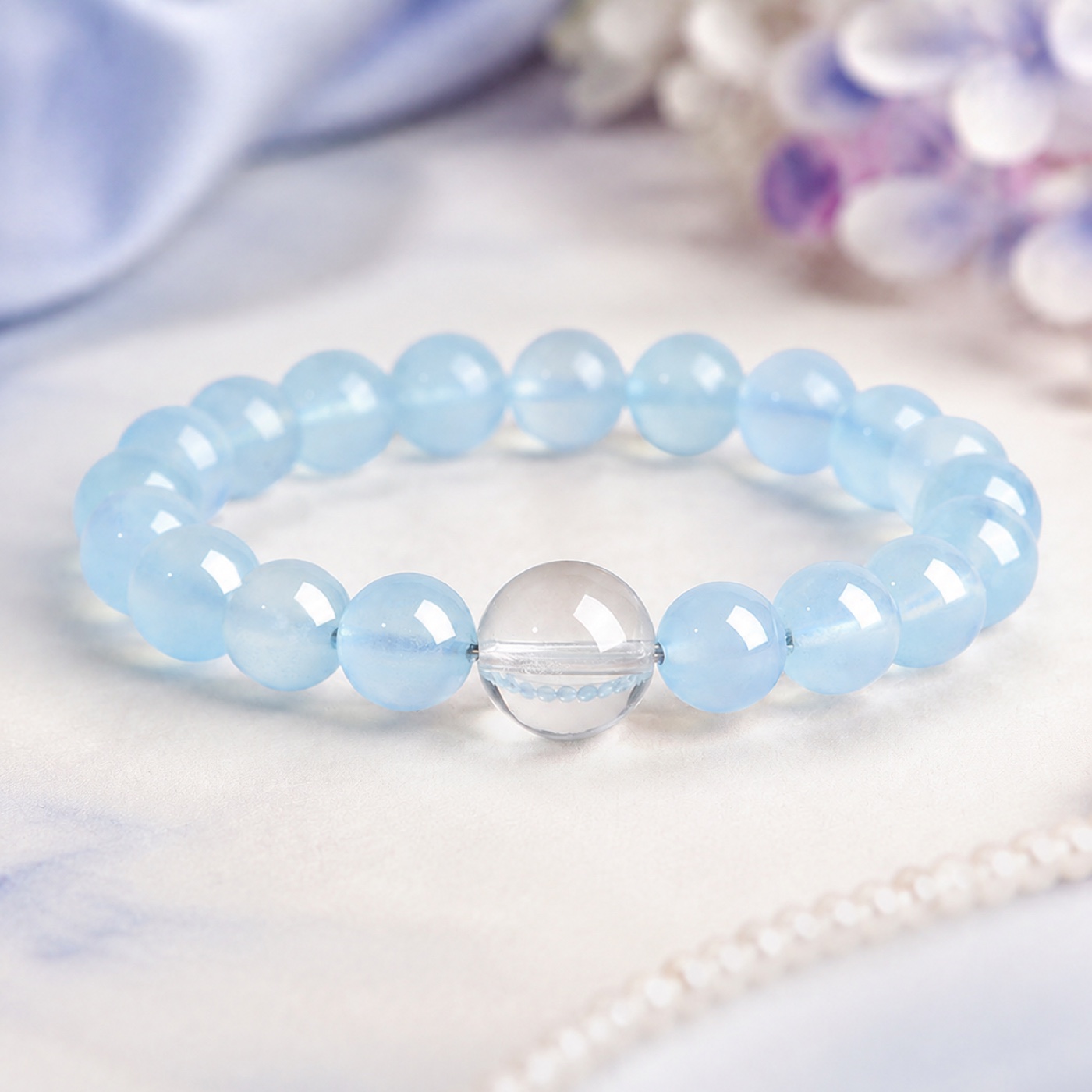
Look at the full bracelet rather than one dramatic close-up. Ask whether the bead sequence feels intentional and whether the seller provides enough views to inspect the piece as a whole.
2. Drill holes, polish, and surface finish
Zoom in on the holes and edges. Clean drilling, smooth transitions around the holes, even polish, and minimal chipping are signs of careful finishing. Minor natural texture or internal features do not automatically indicate poor quality; rough edges, obvious cracks extending from drill holes, or careless abrasion are more concerning.
3. Construction and alignment
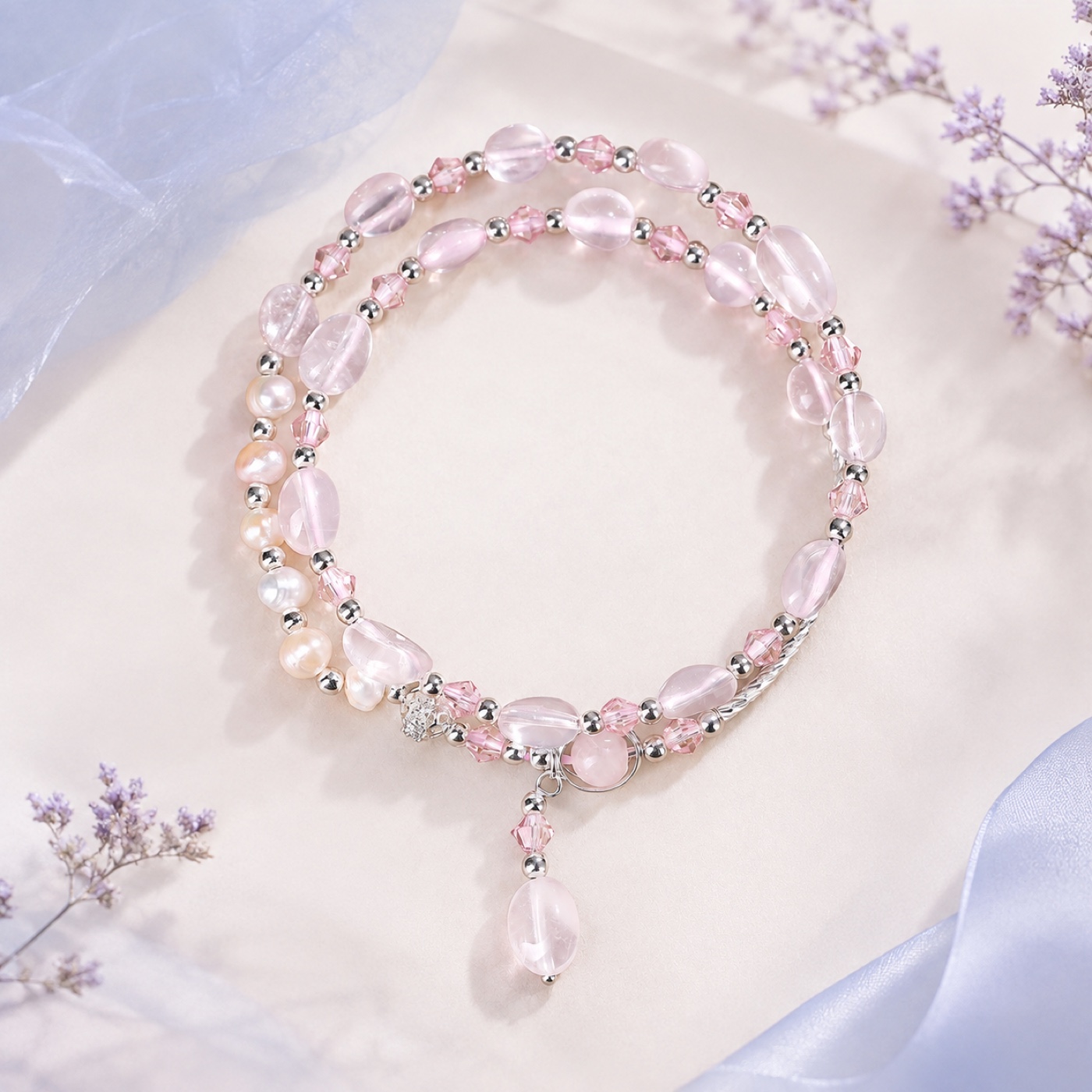
When a listing provides unaltered photographs of the specific item, close views may help you ask informed questions about strand alignment and component placement. Representative or digitally styled images can show a design, but cannot verify the physical finish or condition of the item you receive.
What photos cannot prove
A beautiful image cannot reliably establish mineral identity. Lighting, white balance, editing, screen settings, and background color can all change how a stone appears. Nor can a photograph conclusively prove that a stone is untreated or distinguish every natural material from a sophisticated synthetic or imitation.
Be cautious when a seller treats visual clues as absolute proof. Bubbles, inclusions, temperature, weight, or color zoning may be useful observations in context, but none is a universal verdict for every gem material.
Authenticity and quality are different
| Question | What it concerns | Best evidence |
|---|---|---|
| Is the material correctly identified? | Authenticity | Accurate disclosure; testing when necessary |
| Has it been treated? | Disclosure | Seller information; laboratory report for higher-stakes purchases |
| Is it well finished? | Craftsmanship | Clear photos of polish, drilling, components, and construction |
| Does the bracelet look harmonious? | Design quality | Full-bracelet views and consistent product photography |
A bracelet can contain natural material and still be poorly drilled or assembled. Conversely, a well-made bracelet may use laboratory-grown or imitation material that is honestly disclosed. Good buying decisions depend on both accurate identity and good craftsmanship.
How to judge a high-quality crystal bracelet
Intentional color selection
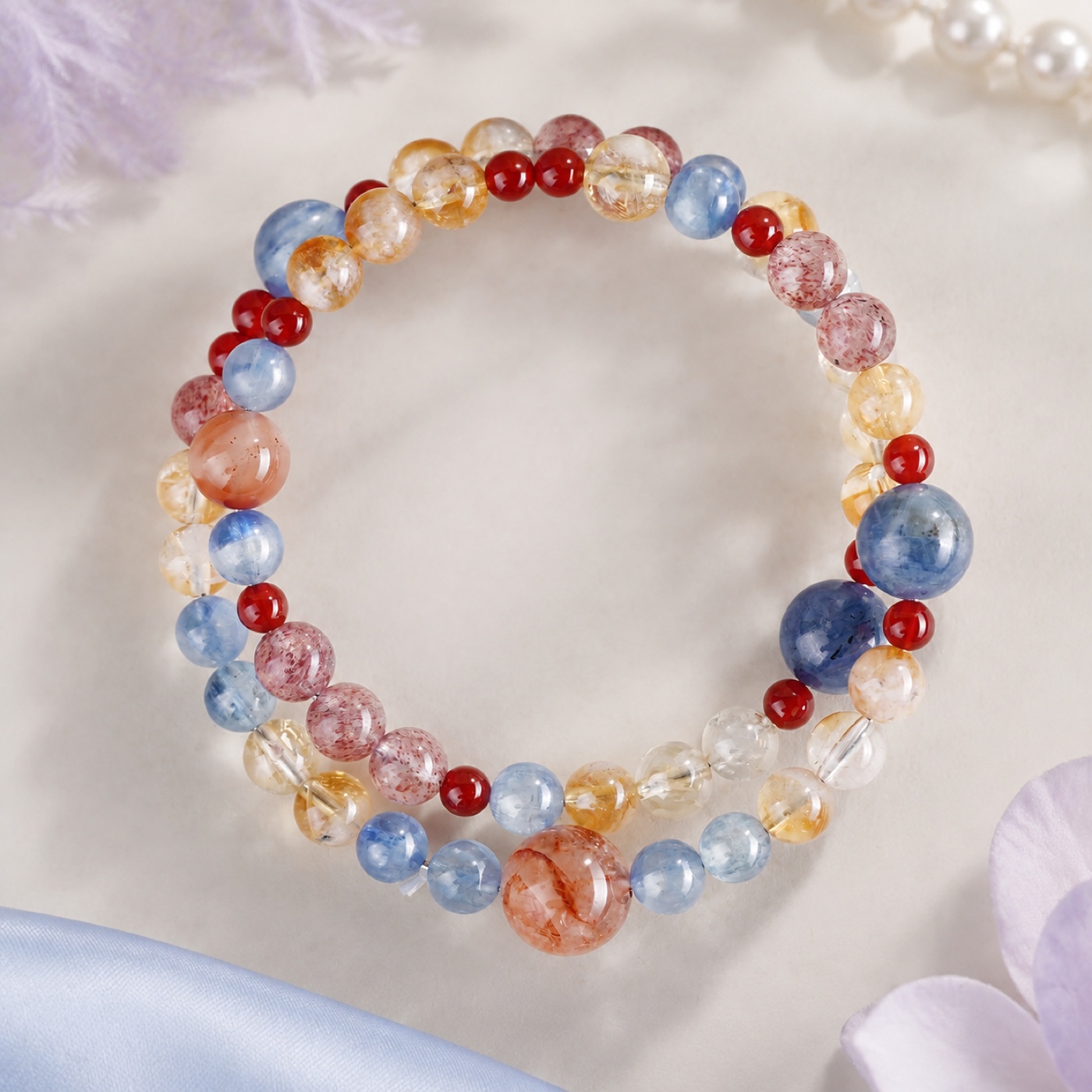
Good matching is not the same as perfect uniformity. Look for a balanced progression of hues, a clear focal point, or a deliberate contrast. Multicolor pieces should still feel composed rather than random.
Consistent polish and careful drilling
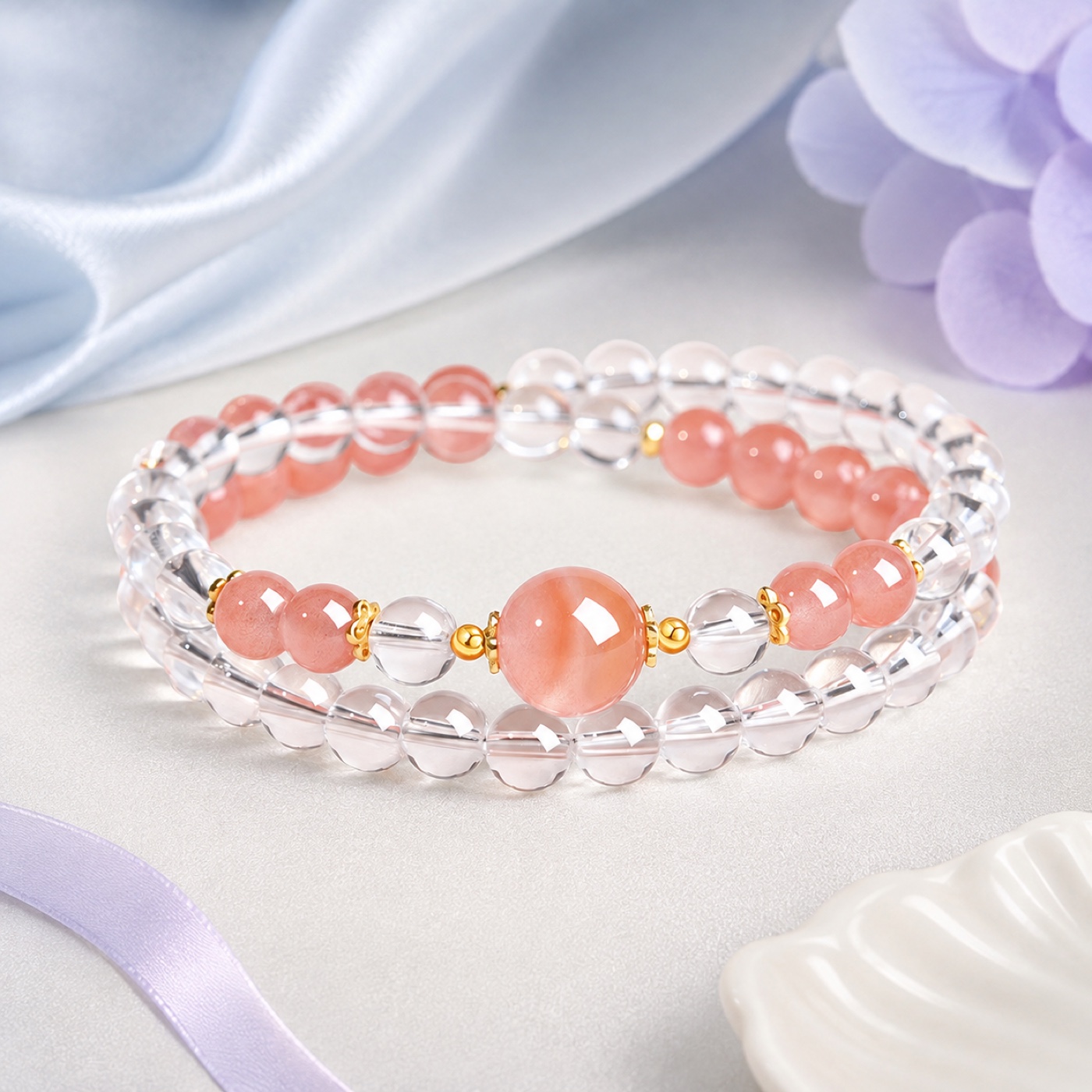
Inspect several beads, not only the best-looking one. Surface reflections should be reasonably clean and consistent. Drill holes should not appear jagged, heavily chipped, or placed so poorly that the beads sit awkwardly.
Balanced construction
Check symmetry, strand spacing, charm placement, and how the bracelet is likely to sit on the wrist. For sizing guidance, read our beaded bracelet size and fit guide.
Home checks: useful observations, not final proof
Inspect under neutral light
View the bracelet in daylight or neutral indoor light and compare it with the seller’s photos. Strong differences do not automatically prove a problem, but they are a reason to ask questions about editing, lighting, or treatment.
Use a loupe carefully
A 10× loupe may reveal surface wear, chips, drill-hole condition, bubbles, growth features, or inclusions. Interpretation is material-specific, however. Seeing an inclusion does not by itself prove natural origin, and not seeing one does not prove the opposite.
Compare weight and temperature only as supporting clues
Glass, stone, resin, and different minerals can feel different, but bead size, hollow components, room temperature, and handling time affect the result. The popular “cold to the touch” test is not a reliable stand-alone identification method.
Avoid destructive tests
Scratch tests, flame tests, chemicals, and impact tests can damage beads, coatings, elastic, finishes, or metal components. They may also be misinterpreted. For a finished bracelet, destructive internet tests are rarely worth the risk.
Seller disclosure matters more than a viral trick
A responsible listing should identify the material clearly and avoid implying that appearance alone proves origin. Treatment information should be disclosed when it affects value or care. The U.S. Federal Trade Commission advises buyers to ask whether gemstones are natural, laboratory-created, or imitation and whether treatments require special care.
Material information varies by design, so review the specific product listing rather than inferring composition from color or photographs. The crystal guide offers general background; for a detail about one design, ask the seller to confirm it before purchase.
Questions to ask before buying
- What is the stated material for every main bead and component?
- Is the material natural, laboratory-grown, or imitation?
- Are any stones dyed, coated, heated, filled, stabilized, or otherwise treated?
- Are the photos of the actual item or a representative sample?
- What is the bead size and bracelet fit?
- What is the return policy if the item differs materially from its description?
- Is independent testing available for a higher-value purchase?
When a laboratory report is worth considering
For an everyday beaded bracelet, independent testing may cost more than the item and may not be practical. A report becomes more relevant when the stone identity materially affects price, the seller makes unusual rarity claims, the item is high value, or you need certainty for insurance, resale, or collecting.
A laboratory report identifies the tested specimen and may describe whether it is natural or laboratory-grown and whether detectable treatments are present. It is not the same as an appraisal and does not automatically assign monetary value.
A practical buying checklist
- Read the full material description, not just the product title.
- Look for multiple clear, consistent photographs.
- Inspect bead variation, polish, drill holes, and construction.
- Treat home tests as clues, never universal proof.
- Avoid destructive testing on finished jewelry.
- Ask direct questions about origin and treatment.
- Check sizing, care instructions, and the return policy.
- Consider laboratory testing only when the value or claim justifies it.
Explore crystal bracelet designs
Use these principles while browsing the Evara Vale crystal bracelets collection. You can also compare construction details in the Clarity Arc Coral Focal Double-Wrap Bracelet.
Frequently asked questions
Can you tell whether a crystal bracelet is real from a photo?
You can assess visible quality and notice clues, but a photo alone cannot conclusively establish material identity, natural origin, or treatment status.
Do bubbles mean a bead is fake?
Sometimes bubbles can suggest glass, but interpreting internal features depends on the material and manufacturing process. One observation is not universal proof.
Does a real crystal always feel cold?
No. Temperature is affected by the material, room conditions, bead size, and how long it has been handled. Use it only as a limited supporting observation.
Are perfectly uniform beads fake?
Not necessarily. Careful sorting can produce a uniform strand, and some natural materials are more consistent than others. Uniformity alone does not identify origin.
What is the safest way to verify a valuable stone?
Start with written seller disclosure. When identity significantly affects value, use a qualified independent gemological laboratory rather than a destructive home test.