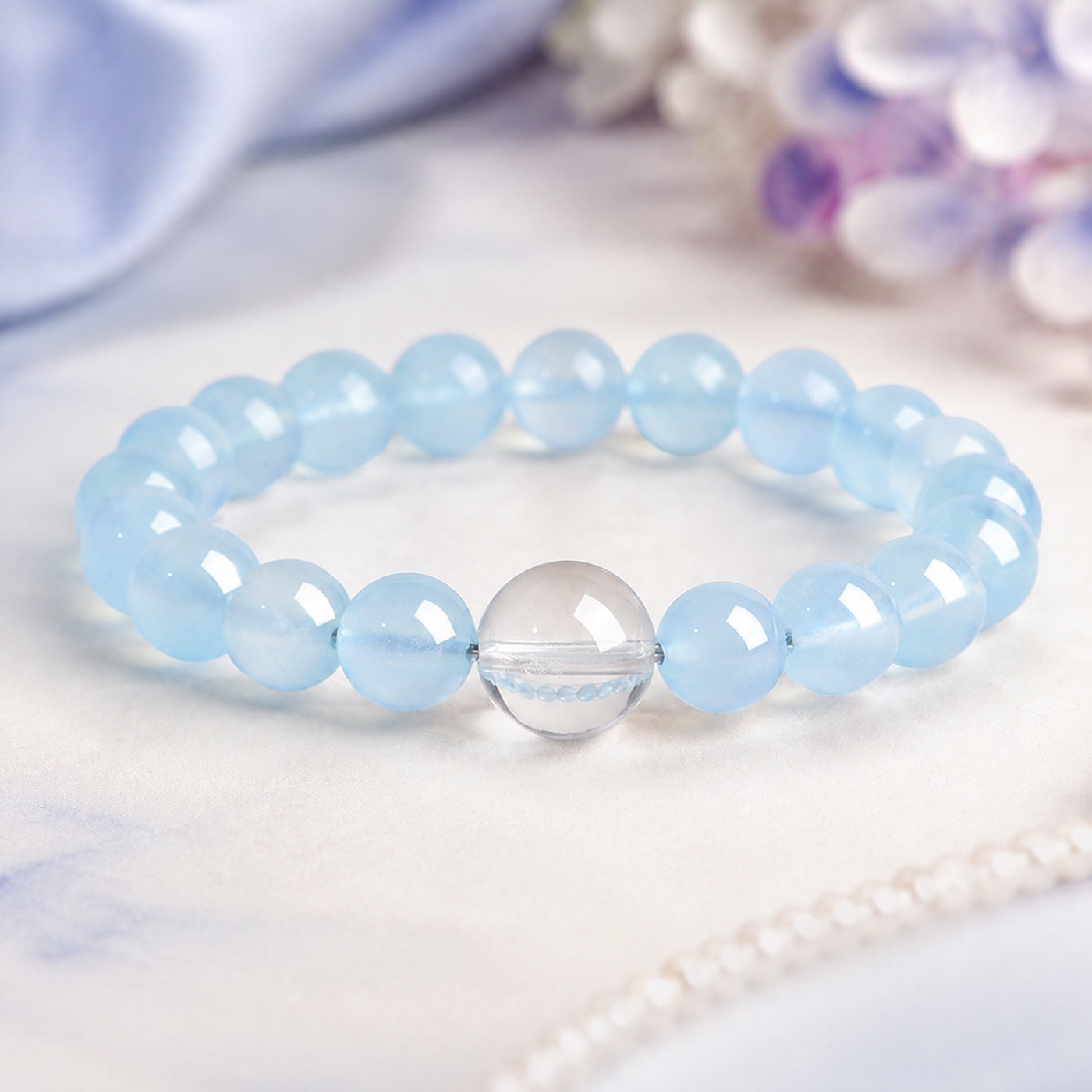
A bracelet can feel personal without being easy to size. If you want the gift to remain a surprise, the safest approach is not to guess a “standard” wrist measurement. Start with evidence the recipient has already given you: a bracelet they wear, the jewelry proportions they prefer, and the way they use their hands throughout the day.
Then check how the new bracelet is constructed and how the seller defines its size. Stretch, wrap, clasped, and fixed-shape bracelets do not fit in the same way—and none should be treated as universally sized without details from the product listing.
Here is how to choose thoughtfully while keeping the sizing risk under control.
Start with a bracelet they already wear
An existing bracelet is usually your most useful clue, but only if the recipient wears it comfortably.
Look for a piece they choose often rather than one that sits untouched in a jewelry box. Notice where it rests, how much it moves, and whether it closes with a clasp, stretches over the hand, or wraps around the wrist.
If you can borrow it briefly, check how the seller of the new bracelet asks customers to measure. Depending on the design, that might mean:
- Measuring the total length from end to end
- Measuring between usable clasp points
- Measuring the inside circumference
- Measuring the diameter of a rigid bangle
- Recording the wrist size for which the bracelet is recommended
These measurements are not interchangeable. A beaded bracelet’s outside length, for example, does not necessarily describe the usable space inside the loop. Larger beads can reduce that interior space.
If the new product page does not explain what its stated size represents, ask the seller before ordering.
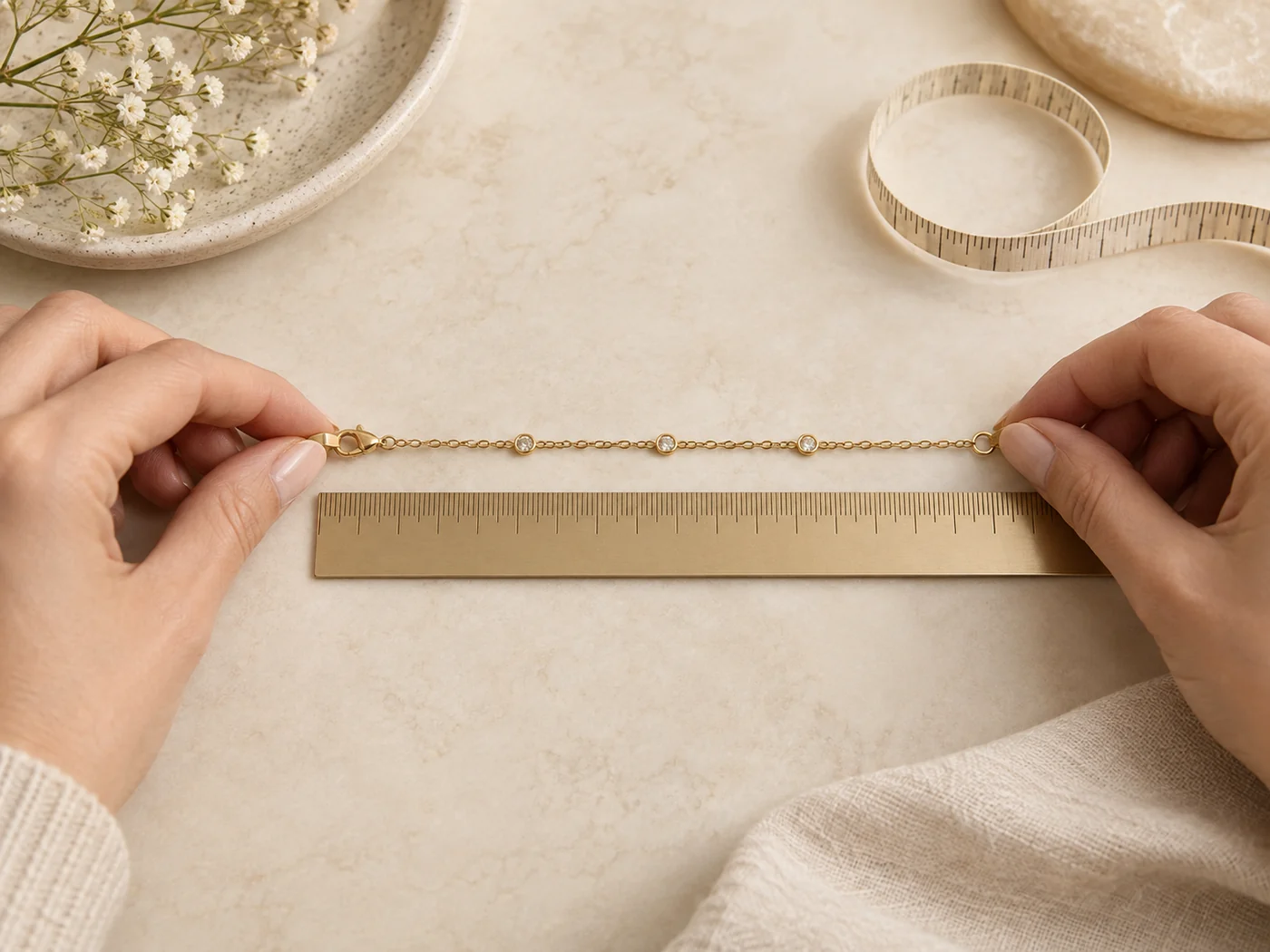
Use discreet clues, not body-size assumptions
Clothing size, height, weight, and ring size do not reliably tell you someone’s wrist measurement. A visual guess can also be misleading, especially when you are comparing your wrist with theirs from memory.
Better clues include:
- A watch strap they wear regularly
- A bracelet they already find comfortable
- A recent photo showing whether their jewelry fits closely or moves freely
- A friend or family member who can ask naturally
- A casual conversation about jewelry sizing while shopping together
A watch can help you understand how close or loose the recipient likes wrist accessories, but it may not translate directly to a beaded bracelet. Treat it as a preference clue rather than an exact measurement.
If you cannot find a dependable reference, asking is better than turning a meaningful gift into an uncomfortable one. You can preserve some of the surprise by revealing the category—not the exact design—and asking for a wrist measurement.
Check the bracelet’s construction before deciding
Construction affects how much sizing uncertainty a bracelet can tolerate.
| Bracelet construction | What to verify before buying | Important caution |
|---|---|---|
| Stretch bracelet | Recommended wrist range, inside fit, bead size and elastic construction | Stretch helps the bracelet pass over the hand; it does not make every size comfortable |
| Clasped bracelet | Finished length, usable clasp points and whether an extension is included | Do not assume a visible chain is adjustable unless the listing says so |
| Wrap bracelet | Total length, number of wraps and closure method | “Wrap” describes the silhouette, not automatically an adjustable fit |
| Rigid bangle | Interior diameter and required hand measurement | Wrist circumference alone may not establish whether it will pass over the hand |
| Open cuff | Interior dimensions and adjustment guidance | Repeated bending may damage some cuffs; follow the maker’s instructions |
The best gift option is the one whose actual sizing information matches the evidence you have. A theoretically flexible design is not helpful if the product page never states its usable range.
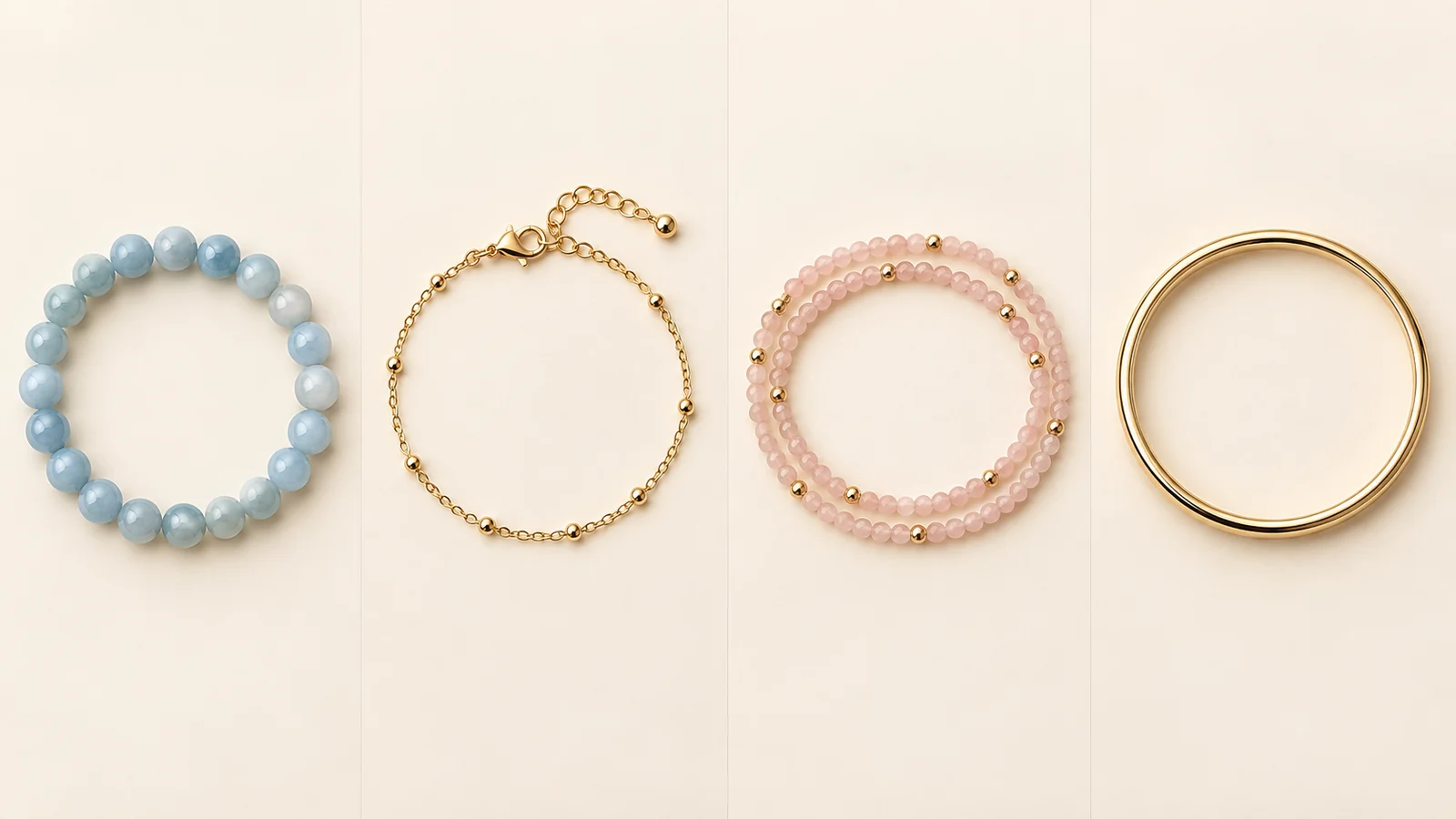
Separate bead size from bracelet fit
On beaded jewelry, a measurement such as 6 mm, 8 mm, or 10 mm often refers to the diameter of an individual bead—not the wrist size.
Bead diameter changes the visual presence of the bracelet. Smaller beads tend to create a finer line around the wrist, while larger beads create a fuller silhouette. Neither automatically indicates whether the finished bracelet will fit the recipient.
For a closer look at that distinction, use Evara Vale’s beaded bracelet size and fit guide.
When giving a bracelet, consider both questions separately:
- Will the finished bracelet fit comfortably?
- Will the bead proportion suit the recipient’s style?
A correct fit can still feel wrong if the design is much bolder or more delicate than anything the recipient normally wears.
Let their current jewelry reveal their style
You do not need to know someone’s favorite gemstone to choose a thoughtful bracelet. Their existing jewelry can tell you a great deal.
Look at visual scale
Does the recipient wear fine chains and small earrings, or do they prefer substantial watches and statement pieces?
A quieter bracelet may suit someone who keeps accessories subtle. A larger focal bead, multi-strand design, or pendant detail may be more appropriate for someone who treats jewelry as the center of an outfit.
Notice their color palette
Look at the clothes and accessories they reach for most often.
- Soft pink, pale blue, clear and neutral tones can sit easily with light wardrobes.
- Violet, amber or multicolor designs create a more defined focal point.
- Repeated gold-tone or silver-tone details may help the new piece relate to jewelry they already own.
You do not need an exact color match. A shared undertone or repeated metal color is often enough to make a new bracelet feel familiar.
Observe whether they layer jewelry
Someone who regularly wears a watch or several bracelets may appreciate a narrower supporting strand. Someone who usually wears one wrist accessory may prefer a piece with a clear focal detail.
If they enjoy layered looks, Evara Vale’s guide to stacking beaded bracelets can help you judge color, bead scale and everyday comfort.
Pay attention to their routine
A bracelet should suit the recipient’s day as well as their style.
For someone who types frequently, a very loose bracelet or prominent charm may press against the desk. Delicate knitwear can also catch on exposed fittings. Someone who prefers fitted sleeves may be happier with a narrower silhouette than a broad stack.
These practical details often determine whether a gift becomes an everyday piece or something worn only occasionally.
Choose meaning without making promises
A thoughtful jewelry gift can mark a birthday, a new beginning, a friendship or a memory without requiring a dramatic story.
You might choose:
- A color that reminds you of a shared place
- A design that echoes jewelry they already love
- A focal detail that feels connected to the occasion
- A stone traditionally associated with a quality they value
- A bracelet that complements a piece they already wear
When referring to crystal symbolism, keep the language personal and grounded. Gemstones may carry traditional or cultural associations, but a bracelet should not be presented as a treatment or as a guarantee of a particular outcome.
Color, craftsmanship, memory and the recipient’s own interpretation are meaningful reasons to choose a piece.
Make the product listing pass a gift test
Before ordering, confirm the details that photographs cannot establish.
Sizing
Look for a recommended wrist range and an explanation of how the bracelet was measured. If only a bead diameter appears, the listing has not necessarily answered the fit question.
Construction
Confirm whether the piece is stretch, clasped, adjustable, wrapped or rigid. Do not infer the construction from a close-up image.
Materials and metal details
Read the stated material information, especially if the recipient has known sensitivities. Color alone cannot identify a gemstone, treatment or metal composition.
Natural visual variation
Natural stone jewelry may vary in tone, clarity, pattern or visible inclusions. Review the seller’s disclosure so you understand whether the photographed piece is exact or representative. Evara Vale’s Crystal Guide explains how visible variation can appear in gemstone jewelry.
Delivery timing
Leave enough time for processing and delivery, especially around birthdays and holidays. A rushed order gives you less room to clarify sizing or inspect the piece before giving it.
Returns and exchanges
Read the current return policy before ordering. Keep the bracelet unworn and retain its original packaging until the recipient has checked the fit.
A clear return path does not make sizing irrelevant, but it makes an honest mismatch easier to resolve.
When should you stop guessing?
Pause the purchase when:
- The listing does not define the bracelet size
- You cannot tell whether a measurement describes the beads or the finished piece
- The recipient has mentioned difficulty finding bracelets that fit
- The design is fixed-size and you have no reliable reference
- The seller cannot explain the recommended wrist range
- The item cannot be returned or exchanged
At that point, ask for the measurement or involve the recipient in the final choice. A partially revealed surprise is better than jewelry they cannot comfortably wear.
A simple bracelet-gift checklist
Before placing the order, make sure you can answer these questions:
- Do I have a real clue about the recipient’s wrist or current bracelet fit?
- Do I understand how this product’s size is defined?
- Have I separated bead diameter from finished bracelet fit?
- Does the construction allow the amount of flexibility I expect?
- Does the design match the recipient’s usual visual scale and colors?
- Have I checked materials, delivery timing and current return terms?
- Am I comfortable asking instead of guessing if the evidence is weak?
Once those questions are settled, the enjoyable part remains: choosing the color, silhouette and detail that make the bracelet feel like it belongs to them.
Explore Evara Vale crystal bracelets and compare each piece’s stated construction and dimensions before choosing your gift.
Frequently Asked Questions
Are stretch bracelets one size fits all?
No. Stretch allows a bracelet to pass over the hand, but the finished loop still needs to sit comfortably around the wrist. Check the recommended wrist range rather than relying on stretch alone.
Can I measure one of their existing bracelets?
Yes, provided it is a bracelet they wear comfortably and you measure it in the way the new seller requests. A clasped chain, stretch-bead bracelet and rigid bangle may require different measurements.
Should I choose a larger bracelet if I am unsure?
Not automatically. A bracelet that is too loose can travel toward the hand, rotate, catch on clothing or interfere with desk work. Use the product’s sizing guidance or ask the seller for help.
What if I cannot find any sizing information?
Contact the seller before ordering. If the size still cannot be explained, choose another design or ask the recipient for their wrist measurement.
Is it acceptable to ask and spoil the surprise?
Yes. You can ask for a wrist measurement without revealing the exact bracelet. Comfort matters more than preserving every part of the surprise.
If you are still deciding, our crystal bracelets collection is the widest starting point, and convertible jewelry works when you want one gift to cover more than one way of wearing it. Stretch and double-wrap constructions such as this double-wrap design are the ones least dependent on an exact measurement.
For the same reason, a simple stretch design such as this 6 mm clear bead bracelet and the matching 8 mm version cover most wrists without a measurement.