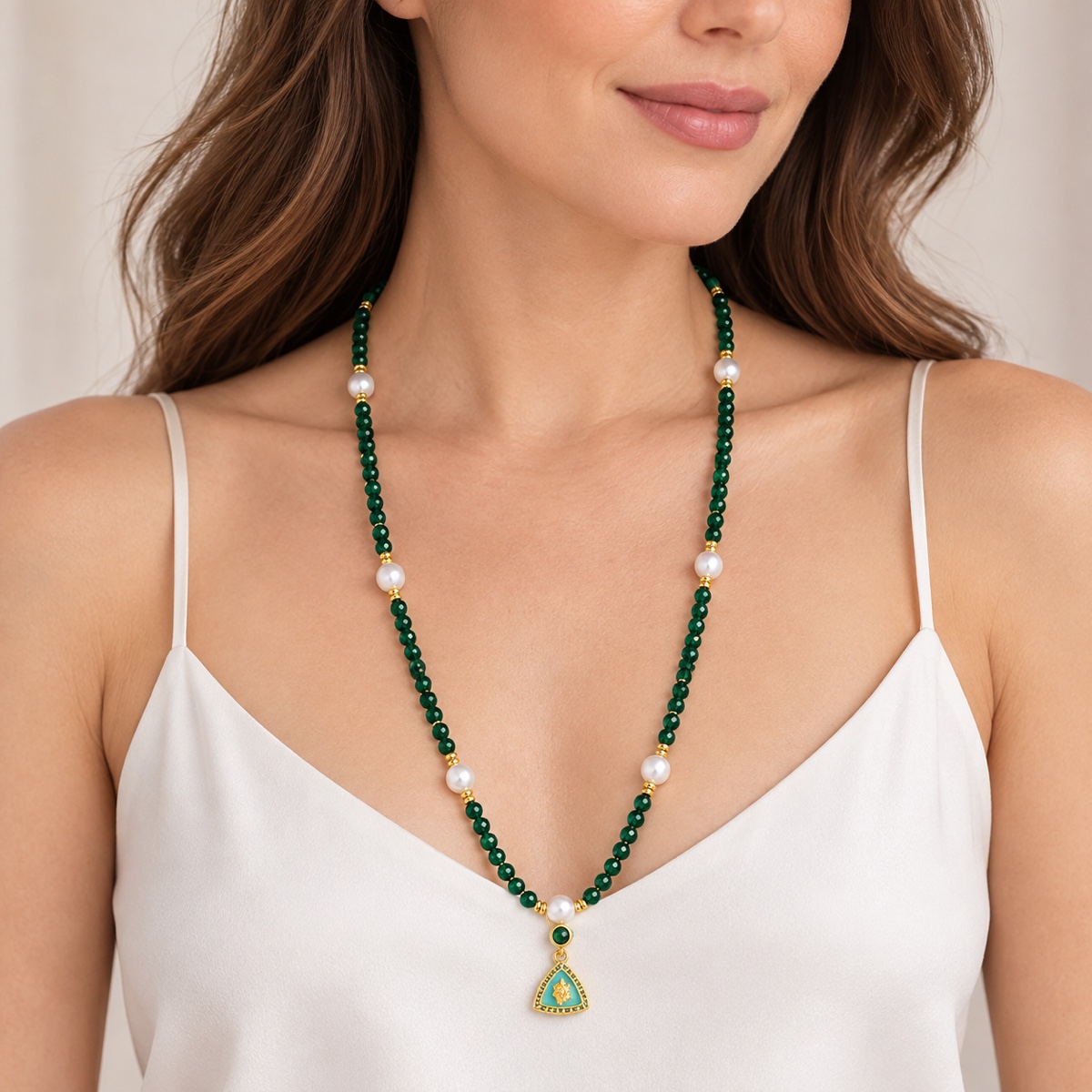
A beaded necklace can add color, texture, or a clear focal point without making an everyday outfit feel overdone. The easiest way to style one is to decide what you want the necklace to do, then give it enough visual space. A quiet strand can frame the neckline, a pendant can become the center of the outfit, and a long necklace can create a vertical line over a simple top or dress.
Start with one necklace and the clothes you actually wear. Check the length against the neckline, look at the bead scale from a normal distance, and add other jewelry only if the first piece still has room to be seen.
Start with the role of the necklace
Before matching colors or building layers, identify the necklace’s main role. This keeps the outfit from becoming busy by accident.
A quiet line of color
A fine or visually consistent strand can act like a narrow line around the neck. It works well when you want a small amount of color near the face without creating a strong centerpiece. Try it with a plain T-shirt, a soft knit, or a button-down shirt.
A central focal point
A pendant, contrasting center bead, or noticeable cluster naturally pulls the eye toward the middle. Give that detail a clear area to occupy. An open collar, V-neck, scoop neck, or simple dress often provides enough space without requiring additional necklaces.
A longer vertical accent
A longline beaded necklace changes the proportions of an outfit. Instead of tracing the neckline, it creates a vertical path down the front of a top or dress. This can add definition to loose layers and unbroken areas of fabric.
Match the necklace to the neckline
The same necklace can look balanced with one top and crowded with another. Put the outfit on first, then check where the necklace lands in relation to the fabric edge.
Crewnecks and higher necklines
With a crewneck, choose a necklace that sits clearly above the neckline or falls far enough below it to look deliberate. A strand that lands directly on the fabric edge may keep slipping in and out of view. Over a plain, close-fitting top, a longer beaded necklace can create useful contrast.
V-necks and open collars
An open neckline already creates a visual frame. A necklace can sit inside that opening, but its shape does not need to copy the neckline exactly. A small pendant or centered focal detail often works well because the eye has a clear place to settle.
Button-down shirts
Try a shorter necklace inside an open collar for a compact detail, or wear a longer strand over a fully buttoned shirt. If the necklace has a pendant or several larger accents, check that they do not repeatedly catch on the placket or disappear beneath the collar.
Dresses and knitwear
A simple dress gives a colorful necklace room to lead. With textured knitwear, look at the necklace from a few steps away: small beads can visually blend into the fabric, while a larger or longer design may remain easier to see. Also check whether raised settings, charms, or fittings could snag delicate knits.
Let length and bead scale work together
Length determines where the necklace sits, while bead scale determines how much visual weight it carries. These two choices should be judged together.
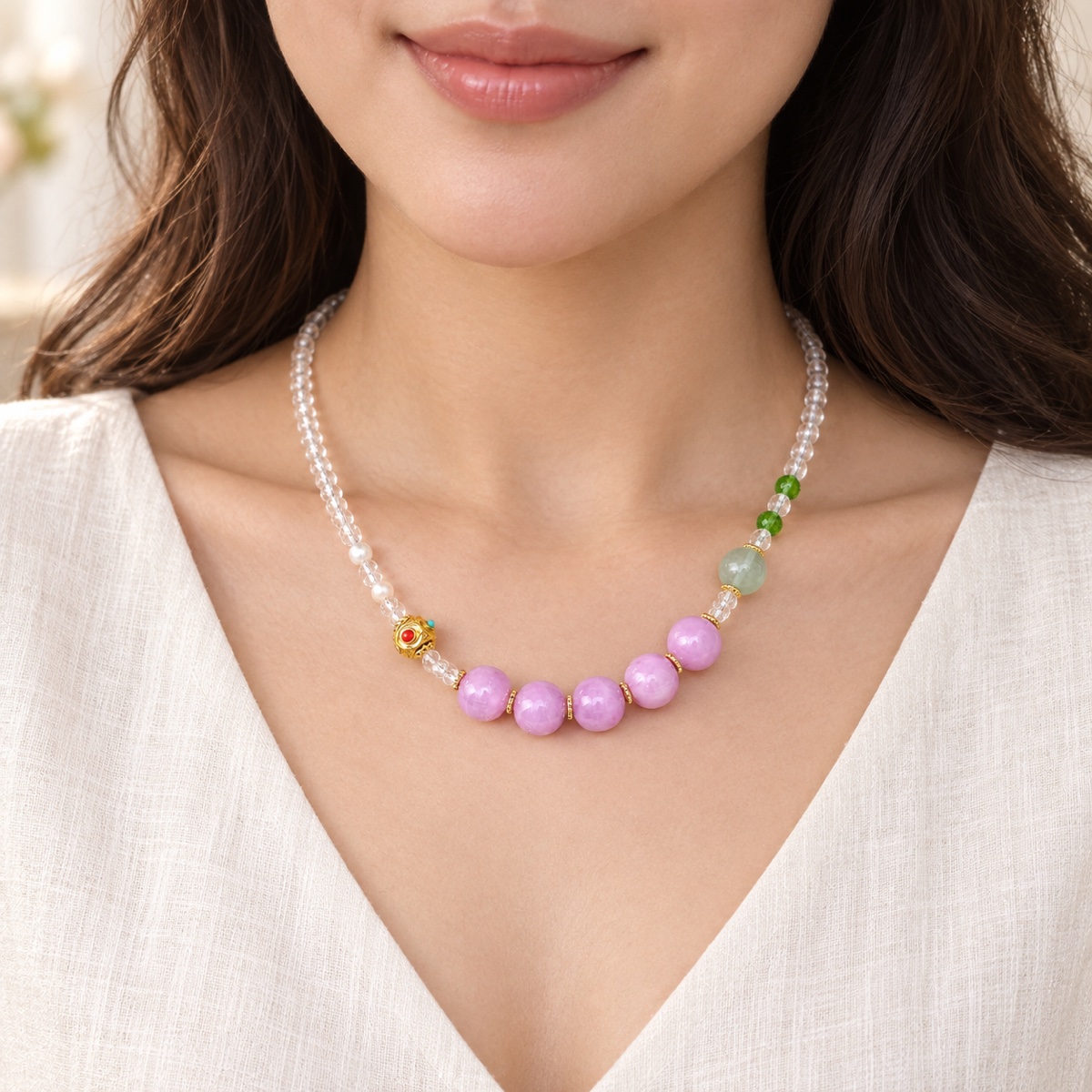
A short strand made with smaller beads can feel precise and understated. The same length with larger beads will occupy more space around the neck. A longer strand may feel lighter because it is distributed over a larger area, even when it includes stronger colors or focal details.
Do not judge scale from a close-up product image alone. Cropping, camera distance, and the proportions of the model can change how large the beads appear. Check the listed measurements and compare the design with jewelry you already own whenever possible. The same principle applies when selecting bracelets; our guide to bead size, fit, and styling explains why millimeters and overall fit need to be considered separately.
How to wear colorful beaded necklaces
Colorful jewelry does not require a colorless wardrobe. The goal is simply to create a relationship between the necklace and the outfit.
Repeat one color
Pick one color from the necklace and repeat it elsewhere in a smaller or quieter way. A violet accent might connect with a shirt stripe, a bag, or a subtle print. The match does not need to be exact; a related color is often enough to make the combination feel considered.
Use a neutral background
Ivory, black, denim, gray, and soft brown can give multicolor beads a calm setting. This is especially useful when the necklace contains several strong colors or an asymmetric pattern. Let the jewelry supply the variation while the clothing provides a stable background.
Choose one dominant color story
If both the necklace and the outfit are colorful, decide which one should lead. A patterned blouse with several colors may work best with a necklace that repeats only one of them. A simpler top can support a more varied strand.
Know when the necklace is enough
A necklace with a pendant, bold color changes, or multiple focal details may already complete the upper half of the outfit. Try removing statement earrings or a second necklace before adding anything else. Restraint can make the most interesting detail easier to notice.
Layer beaded necklaces without losing clarity
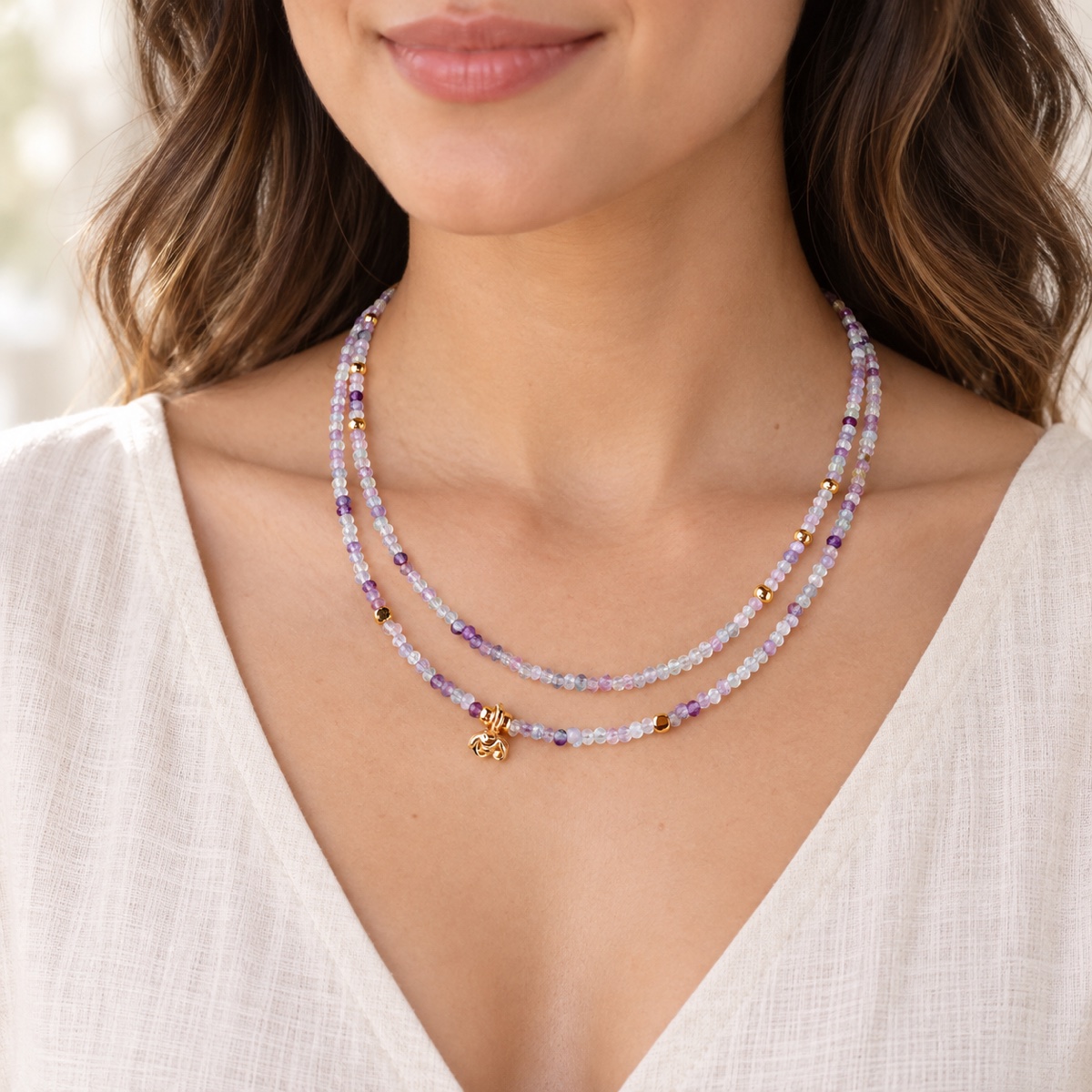
Begin with two necklaces rather than three or four. Give them different visible lengths so that each one has its own line. If both pieces carry strong pendants or large focal beads, they may compete even when their lengths differ.
- Let one necklace be the focal piece.
- Pair colorful beads with a simpler chain or quieter strand.
- Leave enough space between layers for the beads to move.
- Check the arrangement after walking, sitting, and putting on a jacket.
- If the necklaces repeatedly cross or tangle, remove a layer instead of constantly adjusting it.
Weight matters as well as appearance. A heavy strand can pull a fine chain out of position. Check that clasps, pendants, and bead surfaces are not rubbing in a way that could damage either piece.
Coordinate necklaces with bracelets and earrings
Your jewelry does not need to be a matching set. One repeated element is usually enough to create a connection.
You might repeat a gold-tone detail, carry one necklace color into a bracelet, or use similar rounded shapes at the wrist and neck. Keep the emphasis clear: if the necklace is visually complex, choose smaller earrings or a simpler bracelet. If the necklace is quiet, the wrist can carry more color or movement.
For a coordinated wrist without exact matching, use the same approach described in our guide to stacking beaded bracelets: select one focal piece, repeat a color or metal detail, and test the combination while moving.
Three everyday outfit formulas
Plain tee and one colorful strand
Start with a white, black, cream, or gray tee and add one necklace with a clear color story. Keep the earrings small and let the strand provide the main detail. This is the easiest formula for seeing how much visual weight a new necklace carries.
Button-down shirt and a focal necklace
Open the collar enough to give a pendant or central bead room, or button the shirt higher and place a longer necklace over it. Roll the sleeves and add one restrained bracelet if you want to repeat the jewelry elsewhere.
Simple dress and a longline necklace
A long beaded necklace can break up a large area of solid fabric. Look for a length that remains visible without interfering with a belt, buttons, or the edge of a jacket. If the necklace has a strong pendant, avoid placing another focal accessory directly beside it.
Consider a convertible piece
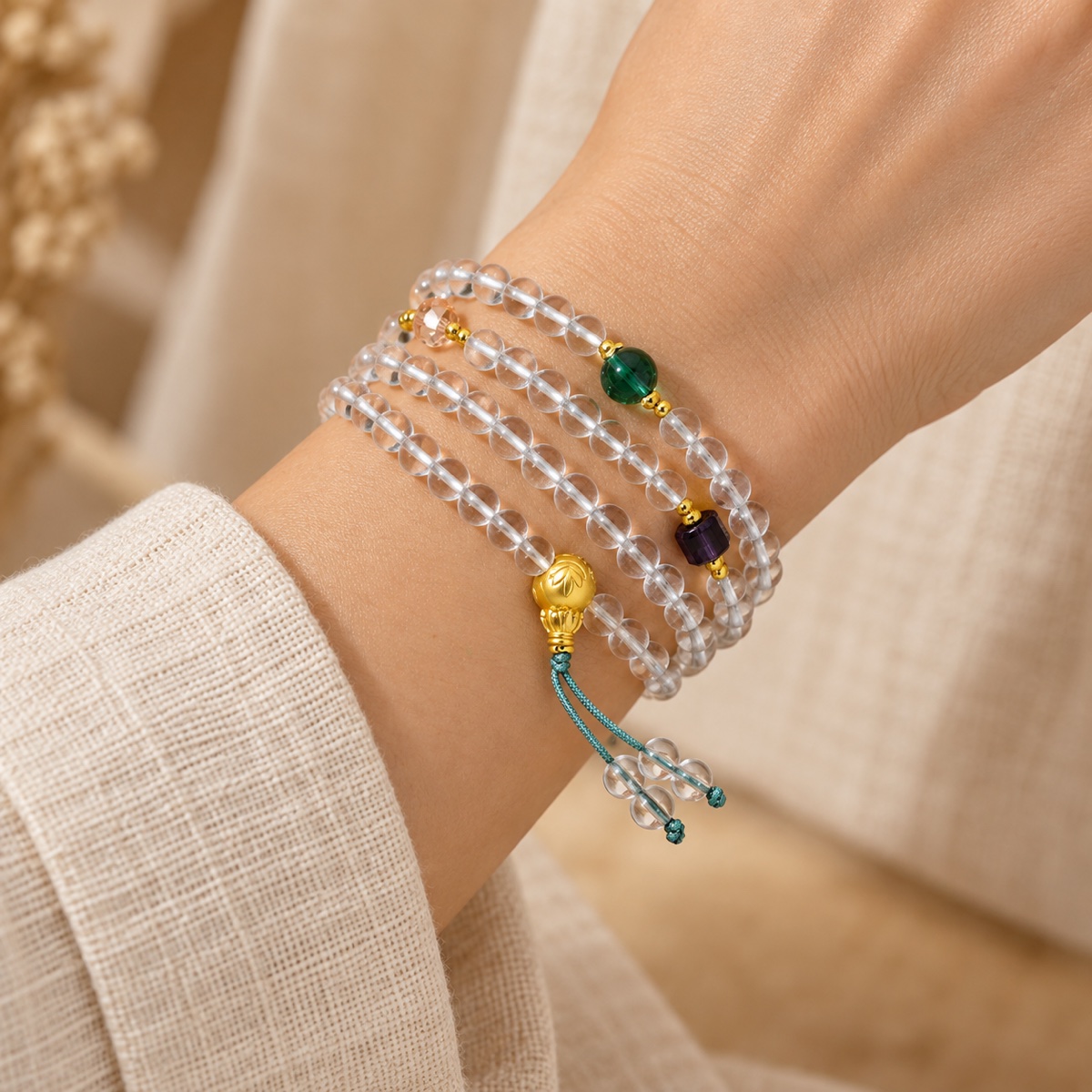
A convertible design gives the same color palette two different positions in an outfit. Worn at the neck, it creates a long beaded line; wrapped at the wrist, it becomes a layered bracelet effect. The choice depends on where the outfit needs detail.
If the neckline already has a print, scarf, or decorative collar, moving the color to the wrist can make the outfit feel less crowded. If the sleeves are simple and the neckline is open, the necklace option may provide the clearer focal point. Evara Vale’s Verselle Clear Orbit Necklace & Wrap Bracelet and Verselle green-pendant convertible design are examples of finished designs intended for either styling path.
Check the look in real life
A mirror shows the composition, but ordinary movement reveals whether it works. Lower your arms, turn your head, sit at a desk, and put on the outer layer you plan to wear. Notice whether the necklace catches in your hair, slips under the neckline, strikes buttons, or competes with a scarf.
Take one quick photo from a normal distance. Close-up inspection emphasizes individual beads, while a full outfit view shows whether the necklace is functioning as a small accent or the main focal point. Make one change at a time so you can tell what improved the balance.
Choosing your first beaded necklace
Use your existing wardrobe as the starting point. If you wear mostly quiet colors and minimal jewelry, begin with a restrained strand or one focused pendant. If you already use prints and layered accessories, a longer or multicolor necklace may fit naturally into your wardrobe.
Before ordering, check the necklace length, construction, color description, focal details, care guidance, and return terms. Photos can help you imagine the styling, but the written product information should guide factual decisions about measurements and materials.
Explore the Evara Vale crystal necklace collection to compare longline, pendant, focal, and beaded silhouettes. Choose the design that works with the clothes and proportions you already enjoy wearing.
If you are choosing between series, our crystal necklaces range is sorted by scale: Aurora covers chip-bead, orb and pendant styles at everyday lengths, and convertible pieces can move between a necklace and a wrap bracelet. A short strand such as this lilac chip necklace layers well under a longer pendant.